
On the other hand, when oil pressure sensor comes to the process of pressure change, we are required to measure instantaneous data in a significant number of the industrial measurements that we take. This is because the pressure change process is a dynamic process. In addition, this is the case when oil pressure sensor comes to the process of pressure change. This is because the process of pressure change is itself a dynamic process, which is the reason why this effect occurs.
Batching, blending, and filling are just some of the many tasks that the SI-3203 is an excellent choice for. Its wide flow ranges and accuracy ratings of either 1.0% or 0. 5% make sanitary turbine flow meter an excellent choice. Through the utilization of either an analogue output or a backlit LCD, High temperature pressure transmitter is possible to achieve a reading of flow data that is user-friendly for the operator.
Additionally, integrated pulse and current outputs make sanitary turbine flow meter possible to remotely monitor production parameters through the use of remote monitoring. It is possible for the IP65 sensor protection to withstand high-pressure washdowns that are carried out on a regular basis.
This constitutes a significant advantage. In order to ensure that these meters are able to withstand daily sanitization cycles without deteriorating, they are constructed entirely out of 316L stainless steel and have a PFA lining. They are extremely long-lasting and will continue to be useful for a very long time.
These transducers can effectively capture and record the specifics of the dynamic pressure change process. Because of this, high frequency pressure transducer is utilized extensively in situations that call for the measurement of high-frequency pressure signals. Some examples of these scenarios include Explosion testing, which includes tests for pipeline explosions and underwater blasting to record the pressure waveforms that are generated instantly during explosions.
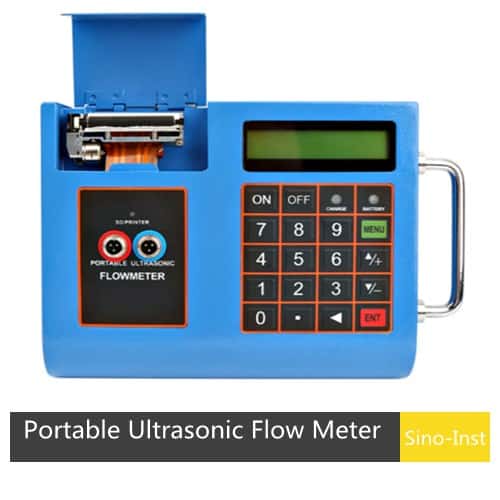
These technologies include magnetic, ultrasonic, and turbine measurement. A wide variety of turndown positions can be accommodated by these technologies, which have a flowing accuracy that can reach up to 0.25%. As a result of the fact that they make use of fieldbus, analog, or pulse signals, the outputs are compatible with any automation infrastructure that is currently in place.