
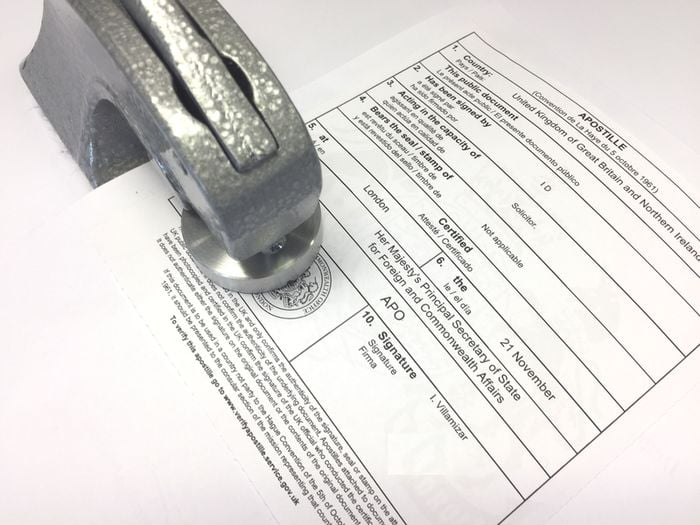
In today’s globalized world, individuals and businesses often need to authenticate documents for use abroad. One common method of legalizing documents for international use is through apostille certification. An apostille is an official certification that authenticates a document for recognition in foreign countries, ensuring that it meets the necessary legal requirements for international use.
What is an Apostille?
An apostille is a certification issued by a designated authority in a country that is a party to the Hague Convention of 1961, known as the Apostille Convention. The convention was designed to streamline the process of document authentication and eliminate the need for lengthy and expensive consular legalization procedures. Essentially, an apostille confirms the authenticity of a document and verifies the legitimacy of the signature or seal on it, allowing the document to be accepted in any of the other countries that are signatories to the convention.
The Hague Apostille Convention
The Apostille Convention came into force in 1965 with the goal of simplifying and standardizing the process for certifying public documents for international use. As of now, more than 115 countries, including the United States, most European countries, and many in Africa and Asia, are part of the convention. If a country is not a signatory to the Apostille Convention, the document may require additional legalization through consular services, which can be a more cumbersome process.
Rules and Requirements for Apostille Certification
The rules and requirements for obtaining an apostille depend on the type of document and the country where the document was issued. However, some common guidelines apply across most jurisdictions:
-
Eligible Documents: An apostille is typically applied to public documents, such as birth certificates, marriage certificates, diplomas, power of attorney documents, and corporate records. Private documents, such as contracts or agreements between individuals, generally cannot be apostilled.
-
Designated Authorities: In each country, a specific government agency or authority is responsible for issuing apostilles. For example, in the United States, each state has an office, typically the Secretary of State’s office, that handles apostille requests. In the United Kingdom, the Foreign and Commonwealth Office (FCO) is responsible for providing apostille certification.
-
Submission of Documents: To obtain an apostille, the document must first be a certified copy of the original document. This may require the document to be notarized or authenticated by another government agency before an apostille can be issued. The process can vary, so it’s essential to check the specific requirements in the country where the document was issued.
-
Application Process: The process typically involves submitting the document, either in person or by mail, to the designated authority. Some authorities offer expedited services for a fee. Applicants will often need to provide identification and may have to pay a processing fee, which varies depending on the country and the type of document.
-
Language Considerations: The apostille certificate is usually issued in the official language of the country where it is granted, though many authorities also provide translations. It is important to ensure that any documents submitted for apostille certification are in the appropriate language or include a certified translation if necessary.
How to Use an Apostilled Document
Once a document is apostilled, it can be used in any country that is a signatory to the Apostille Convention. The apostille will typically be attached to the document or appear as a separate page, depending on the country’s practice. The apostille serves as proof of authenticity, ensuring that the document is recognized as valid by foreign governments, courts, and institutions.
Conclusion
The apostille process simplifies the authentication of public documents for international use. By adhering to the rules and requirements set forth by the Hague certificate to foreign government cfg Convention, individuals and businesses can efficiently navigate the complexities of international document recognition. Understanding the procedure and knowing the designated authority in the issuing country are essential steps in ensuring that documents are properly authenticated for use abroad.