
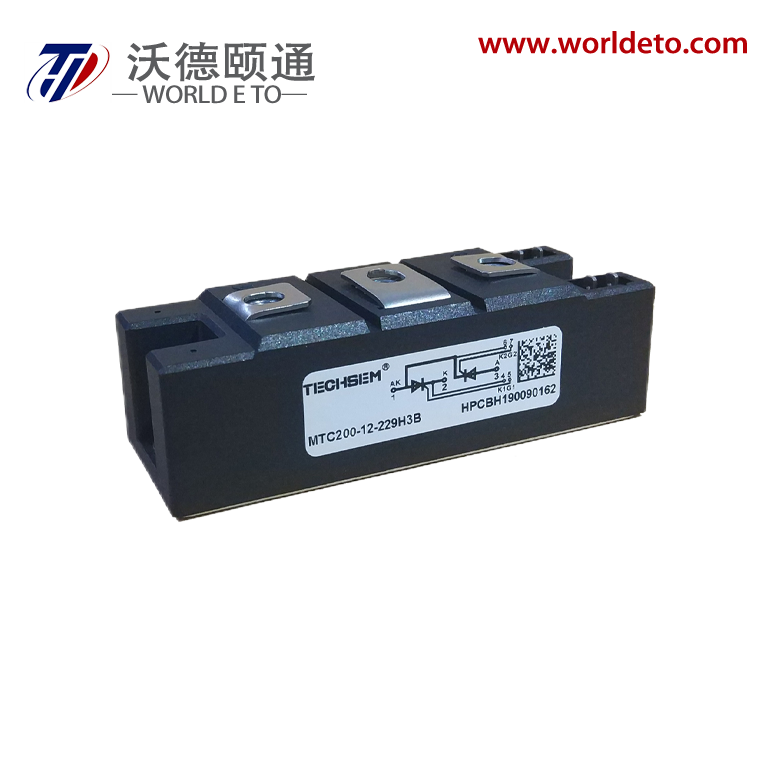
Insulated Gate Bipolar Transistor (IGBT) modules are essential components in power electronics, widely used in various applications such as motor drives, renewable energy systems, and electric vehicles. These modules combine the advantages of both MOSFETs and BJTs, offering high efficiency and fast switching speeds, making them indispensable in modern power systems. However, designing IGBT modules comes with several technical challenges that need to be addressed to ensure optimal performance, reliability, and cost-effectiveness. This article explores common challenges in IGBT module design and discusses ways to overcome them.
1. Thermal Management
One of the most significant challenges in IGBT module design is managing the heat generated during operation. As IGBTs operate at high switching frequencies and power levels, they tend to generate a substantial amount of heat, which can negatively impact their performance and reliability. Excessive heat can cause thermal runaway, leading to module failure.
Solution: To overcome thermal management challenges, designers use efficient heat sinks, thermal interface materials (TIMs), and liquid cooling systems. By enhancing thermal conductivity, these solutions help dissipate heat more effectively. Additionally, the design of the module’s packaging plays a crucial role. Modules with low thermal resistance and optimized layouts can significantly reduce the impact of heat buildup. Advanced simulation tools can also be used in the design phase to predict and optimize thermal behavior, ensuring better heat distribution and heat sink performance.
2. Power Loss and Efficiency
IGBT modules experience power losses during operation, particularly due to conduction losses (when current flows through the device) and switching losses (when the IGBT transitions between on and off states). These losses can reduce the overall efficiency of the system, especially in high-power applications like motor drives or grid connections.
Solution: To minimize power loss, designers focus on improving switching characteristics and selecting IGBTs with optimized conduction paths. The use of advanced gate driver circuits, which control the switching process, can reduce switching losses. Additionally, soft-switching techniques, such as resonant soft-switching and active clamping, can reduce switching losses by controlling the rate of voltage and current transitions during the switching process.
Another approach to enhancing efficiency is using low-loss materials in the module construction, such as low-resistance semiconductors and high-performance copper. Additionally, advanced packaging techniques, such as module bonding with low-inductance connections, can further reduce losses.
3. Switching Speed and Electromagnetic Interference (EMI)
IGBT modules are designed to switch rapidly, but this fast switching can generate significant electromagnetic interference (EMI), which can affect nearby electronic devices and disturb system operation. Managing EMI is particularly important in systems with sensitive electronics, such as medical devices or communication equipment.
Solution: To reduce EMI, designers can focus on shielding techniques, such as incorporating metallic enclosures around the IGBT module or using conductive coatings on the module housing. Additionally, snubber circuits (RC or diode-based circuits) can be used to dampen voltage spikes and reduce high-frequency noise during switching. Employing active gate control circuits can also help reduce the speed of switching transitions, minimizing EMI generation.
Layout optimization is another important consideration. By minimizing the distance between power and control circuits, and using appropriate filtering components, EMI can be reduced. Also, careful PCB design, with proper grounding and shielding techniques, is essential to mitigate electromagnetic interference.
4. Reliability and Durability
Reliability is a critical factor in IGBT module design, particularly in applications that require long operational lifetimes, such as renewable energy systems or electric vehicles. The IGBT Discrete must withstand electrical and thermal stresses over time without degradation or failure. Mechanical stresses, such as vibrations, can also affect the integrity of the module’s components.
Solution: Reliability can be improved through robust packaging that protects against environmental factors, such as humidity and temperature extremes. Using high-quality soldering materials and coating technologies can enhance the durability of the module. Designers can also use highly reliable bonding methods, such as wire bonding or sintering techniques, which provide better mechanical strength and thermal performance.
To ensure long-term reliability, designers often perform extensive stress testing and lifetime prediction modeling to identify potential failure points and optimize the design for higher durability. Advanced simulation tools that model the long-term behavior of the module under different operational conditions are invaluable in designing for reliability.
5. Cost and Material Constraints
Cost is a significant concern in IGBT module design, especially in high-volume applications. The materials used in the module, such as the semiconductor, packaging, and cooling systems, can be expensive, and finding cost-effective solutions without compromising performance is often challenging.
Solution: To manage costs, designers may choose to use cost-effective materials without sacrificing quality. For example, the use of silicon carbide (SiC) or gallium nitride (GaN) instead of traditional silicon can lead to better performance, but the initial costs of these materials can be higher. Balancing the choice of materials with the application’s requirements is key to achieving both cost-effectiveness and high performance.
Additionally, modular designs that allow for mass production and efficient manufacturing processes can help reduce costs. 3D packaging technologies and automation in assembly processes can further lower production costs while maintaining quality and reliability.
Conclusion
Designing IGBT modules is a complex process that requires careful attention to thermal management, power loss, EMI, reliability, and cost. By leveraging advanced materials, innovative packaging solutions, and cutting-edge technologies, engineers can overcome these challenges and design more efficient, reliable, and cost-effective IGBT modules. As power electronics continue to evolve, the development of next-generation IGBT modules will play a crucial role in enabling the transition to sustainable and high-performance energy systems across industries.